Understanding RPE: Use Effort Without Guessing
Learn how to use RPE and reps in reserve for strength training decisions, when to trust it, and when percentages are safer.
RPE stands for rating of perceived exertion. In resistance training, most coaches use a 1 to 10 scale tied to reps in reserve. RPE 10 means no more clean reps were available. RPE 9 means about one rep left. RPE 8 means about two reps left. The idea is useful because strength changes from day to day, but it is also easy to misuse.
RPE is not a license to train by mood. It is a load-selection tool. The question is not how hard did that feel emotionally? The question is how many technically acceptable reps could you have done before the set broke down?
Why RPE Helps
Percentage-based training assumes your tested one-rep max represents today's ability. That is not always true. Sleep, stress, soreness, travel, body weight, nutrition, and warm-up quality can all move performance up or down. If your program says 80 percent for 5 sets of 5, that might be a clean RPE 7 on a good day and an ugly RPE 10 on a bad day.
RPE lets the load adjust while the training goal stays the same. A strength day might call for a top set of 5 at RPE 8. On a strong day, that might be 105 kg. On a tired day, it might be 97.5 kg. Both can be correct if the effort and movement quality match the target.
The Practical Scale
- RPE 10: Maximal effort. No clean reps left. Use rarely in normal training.
- RPE 9: One clean rep left. Useful for heavy top sets, but fatiguing if repeated too often.
- RPE 8: Two clean reps left. A strong default for productive strength and hypertrophy work.
- RPE 7: Three clean reps left. Good for technique practice, volume accumulation, and lower-stress weeks.
- RPE 6 or below: Warm-ups, speed work, rehab-style exposure, or very easy volume.
Beginners often undershoot or overshoot because they have not taken enough sets near failure to know what the end feels like. That is normal. Use conservative targets first, and occasionally test a safe accessory movement to calibrate your sense of reps in reserve.
Where RPE Goes Wrong
The biggest mistake is rating pain, fear, or breathing instead of muscular effort. A high-rep squat can feel terrible while still leaving several reps in reserve. A heavy deadlift single can feel intimidating even when bar speed is fast. Another mistake is changing technique to earn the target RPE. If you hit RPE 8 only because depth got shorter, the number is not useful.
RPE also works better on some lifts than others. A dumbbell row or bench press set of 8 is usually easier to rate than a heavy deadlift single. For technical lifts, combine RPE with video, bar speed, and conservative load jumps.
A Simple RPE Workflow
Start each main lift with a planned effort cap. For example: work up to 1 set of 5 at RPE 8, then perform 3 back-off sets at 90 percent of that load. If the top set is accidentally RPE 9.5, reduce the back-off load more aggressively. If it is RPE 6.5, add a small amount and repeat only if technique is still consistent.
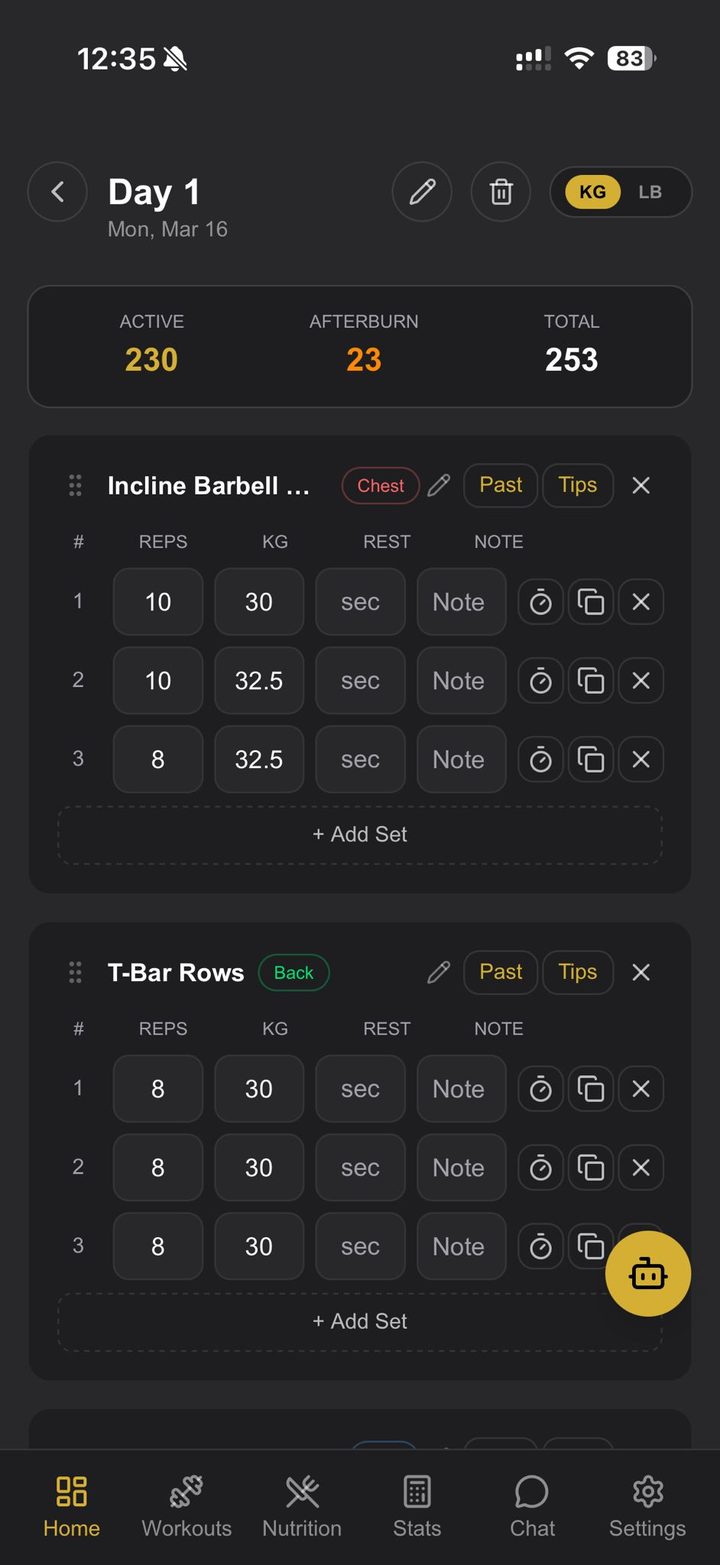
In Carbyne Lab, record RPE next to the set that drove the decision. You do not need a paragraph after every set. A short note such as RPE 8, bar speed good, right hip tight is enough context for the next session.
RPE Versus Percentages
The best programming often uses both. Percentages give structure. RPE gives reality checks. A block might use 70 to 80 percent for most volume work while capping sets at RPE 8. If the prescribed percentage is too heavy on a given day, the cap keeps the session from turning into a max test.
Use percentages when you need repeatability, especially for beginners and group coaching. Use RPE when lifters are experienced enough to judge effort and when daily readiness matters. If both disagree, technique decides. The best load is the one that achieves the session goal with the movement standard intact.
Sources and Further Reading
Author
Brian Chang
Brian Chang is an IFPA Master Personal Trainer who writes and reviews Carbyne Lab's fitness education, with a focus on strength training, exercise technique, nutrition tracking, and practical coaching decisions.
View author profileReviewed
Brian Chang, IFPA Master Personal Trainer
Maintained under the site's editorial standards. Last updated May 26, 2026.
View reviewer profileReady to train smarter?
Try Carbyne Lab free — AI-powered workout tracking, nutrition logging, and program generation.
Get Started FreeMore from the Blog
The Complete Warm-Up Guide for Lifters
A simple warm-up structure for strength training: raise temperature, open the needed range, activate weak links, and ramp to working weight.
Sleep and Recovery: The Training Variable Most Lifters Underestimate
How sleep changes strength sessions, hunger, recovery, motivation, and when to adjust training after poor sleep.
Squat Form Guide: Build a Repeatable Squat Before Adding Load
A coach's checklist for squat stance, bracing, depth, bar path, common mistakes, and when to reduce load.
Progressive Overload: How to Progress Without Chasing Maxes
A practical progression framework for adding load, reps, sets, and better movement quality while keeping recovery and technique in check.