Workout Log Review Checklist: What a Coach Looks For
A practical checklist for reviewing workout logs: consistency, progression, exercise balance, effort, recovery, and notes that explain plateaus.
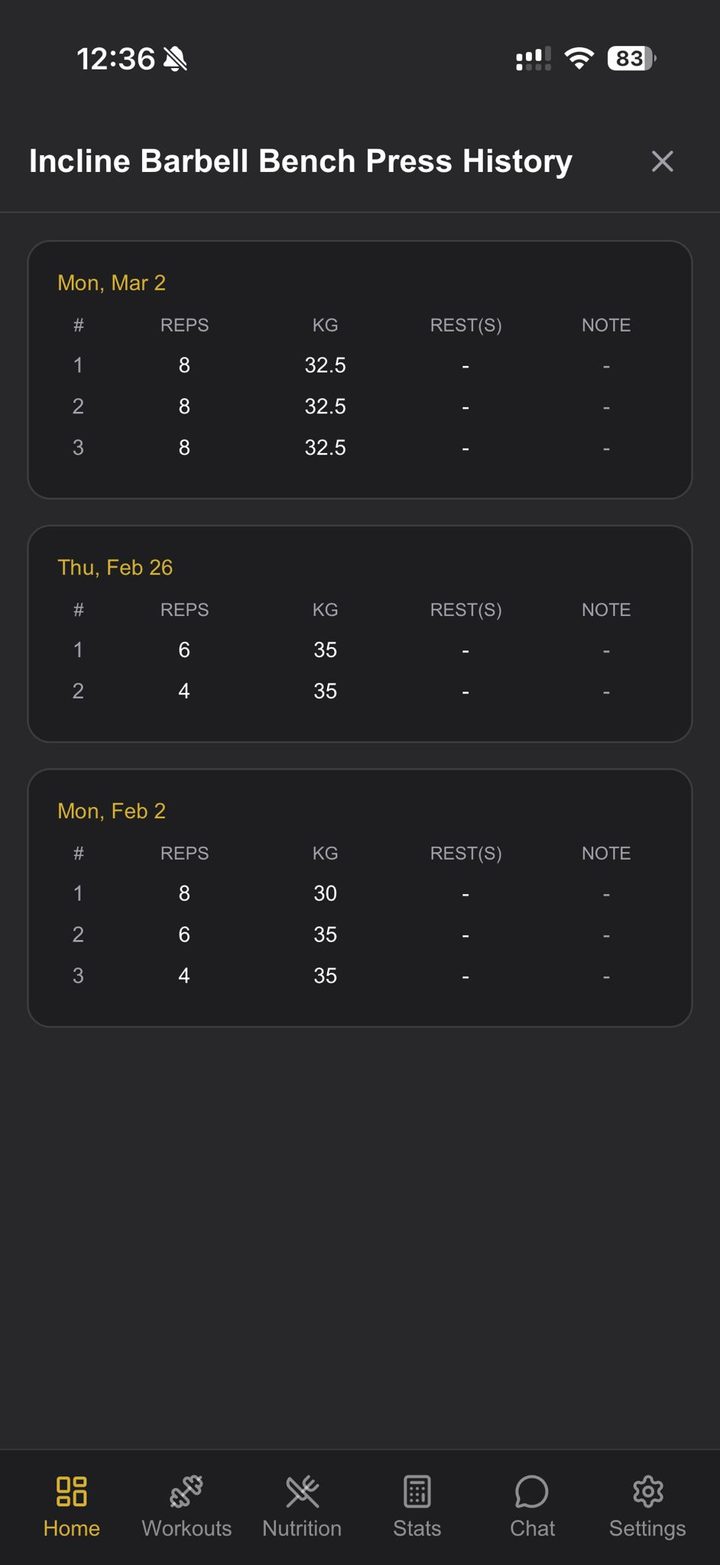
A workout log is not valuable because it stores numbers. It is valuable because it shows patterns a lifter cannot reliably remember. A coach reviewing a log is looking for the gap between what the program intended and what actually happened.
That review is especially useful when progress stalls. Before changing exercises, adding supplements, or blaming motivation, the log can answer simpler questions: did the lifter train consistently, did load progress too fast, did volume jump, did hard sets cluster too close together, or did recovery fall apart?
1. Attendance and Timing
First, check whether the planned sessions happened. Missing one session is normal. Missing every lower-body day for three weeks is a programming problem, scheduling problem, or preference problem. The best plan is the one the athlete can repeat.
Spacing matters too. Four sessions spread across the week are different from four sessions crushed into three days. If soreness or fatigue keeps showing up, check the calendar before changing the exercise list.
2. Progression Quality
Look for progression with context. Did load increase while reps, depth, tempo, and RPE stayed stable? That is useful progress. Did load increase while range of motion disappeared and every set became a grind? That is not the same adaptation.
Good logs include enough detail to separate real progress from number chasing. In Carbyne Lab, that usually means logging load, reps, sets, and RPE, then adding short notes only when they explain a decision.
3. Exercise Balance
A weekly review should show whether the program covers the goal. A general strength plan usually needs squat or leg-press patterns, hinges, presses, pulls, trunk work, and enough single-leg or accessory work to address weak links. A hypertrophy plan may distribute work by muscle group instead.
Imbalance does not mean every muscle gets identical volume. It means the program's actual work matches the lifter's goal and tolerance. If shoulders hurt and pressing volume doubled while pulling disappeared, the log points to the next change.
4. Effort Distribution
Not every set should be maximal. A log where every main lift is RPE 9 to 10 usually predicts a stall. A log where every set is RPE 5 may not provide enough stimulus. Most productive training lives between those extremes, with harder work placed intentionally.
When reviewing a block, check whether hard weeks and easier weeks exist. If the lifter never has a lower-stress week, fatigue may hide fitness. If the lifter never gets close enough to challenging work, the program may be too easy.
5. Recovery Clues
Recovery shows up indirectly. Bar speed slows, warm-ups feel unusually heavy, soreness lingers, sleep notes get worse, appetite changes, and motivation drops. None of these alone proves overtraining, but together they tell the coach to reduce stress before a minor problem becomes a forced break.
Short notes are enough: poor sleep, low back tight, travel week, unusually strong, left knee discomfort. A coach does not need a diary. They need the facts that change the next prescription.
6. The Next Decision
A review should end with one decision, not ten. Add one set to a lagging pattern. Lower the training max. Swap an exercise that irritates a joint. Keep the plan unchanged because progress is still moving. The log's job is to make that decision less emotional.
This is where Carbyne Lab is different from a spreadsheet. Workout history, notes, nutrition context, and coach messaging live together, so the review can connect performance with behavior instead of treating each session as an isolated event.
Sources and Further Reading
Author
Brian Chang
Brian Chang is an IFPA Master Personal Trainer who writes and reviews Carbyne Lab's fitness education, with a focus on strength training, exercise technique, nutrition tracking, and practical coaching decisions.
View author profileReviewed
Brian Chang, IFPA Master Personal Trainer
Maintained under the site's editorial standards. Last updated May 26, 2026.
View reviewer profileReady to train smarter?
Try Carbyne Lab free — AI-powered workout tracking, nutrition logging, and program generation.
Get Started FreeMore from the Blog
Deload Week for Strength Training: When to Reduce Volume and Why
How to spot accumulated fatigue, choose a deload strategy, and return to productive training without losing momentum.
Understanding RPE: Use Effort Without Guessing
Learn how to use RPE and reps in reserve for strength training decisions, when to trust it, and when percentages are safer.
Trainer Check-In Template: Questions That Actually Improve Programming
A practical weekly check-in structure for personal trainers: adherence, recovery, nutrition, pain flags, and the next programming decision.
Sleep and Recovery: The Training Variable Most Lifters Underestimate
How sleep changes strength sessions, hunger, recovery, motivation, and when to adjust training after poor sleep.