How to Track Macros for Muscle Gain Without Overcomplicating It
Set calories, protein, carbs, and fats for a lean gaining phase, then adjust from body-weight trends and training performance.
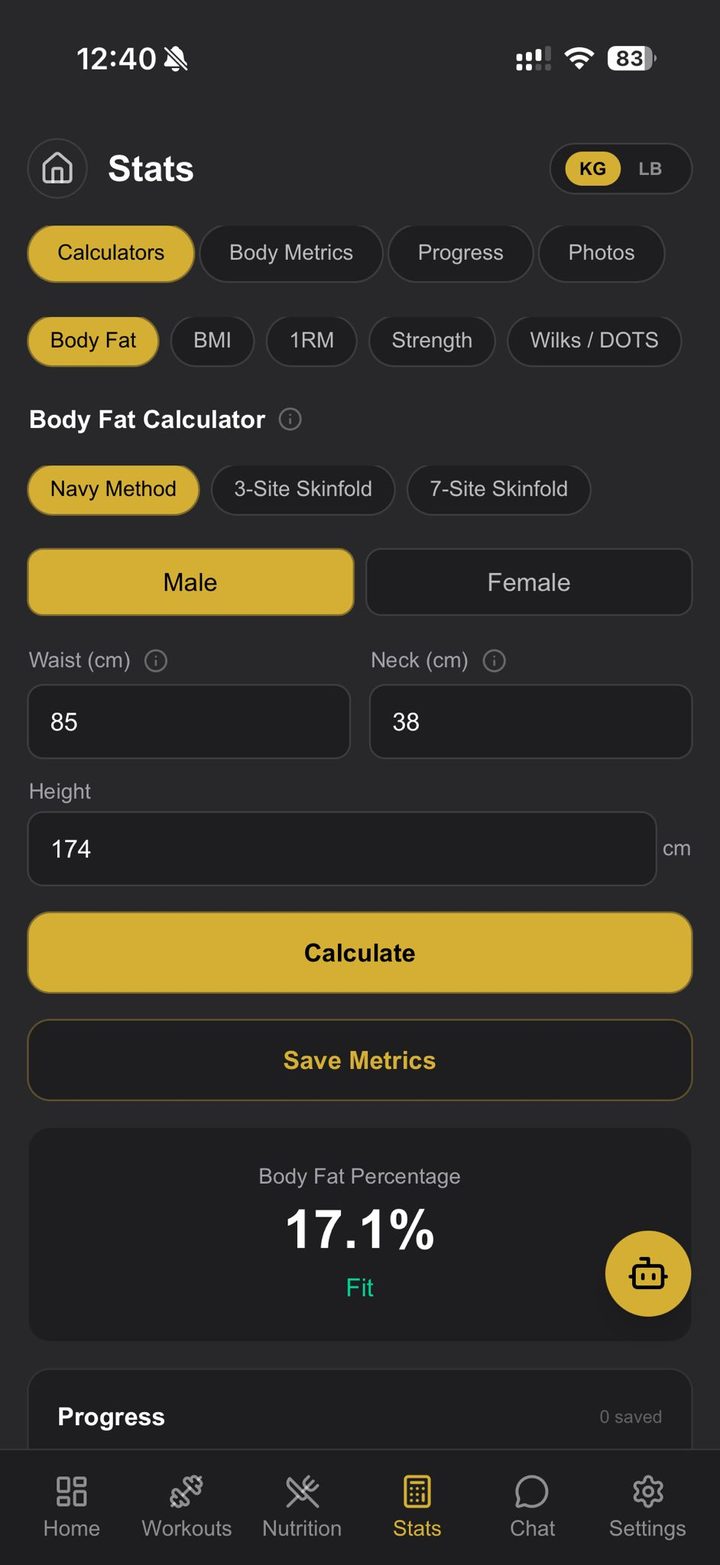
Macro tracking is useful when it helps you make better food decisions. It becomes counterproductive when it turns every meal into a math exam. For muscle gain, the goal is straightforward: eat enough total energy to support growth, enough protein to support muscle protein synthesis, enough carbohydrate to train hard, and enough fat to keep the diet sustainable.
You do not need perfect tracking forever. You need a few weeks of honest data so you can understand your normal intake, body-weight trend, and training response.
Step 1: Estimate Maintenance Calories
Start with a resting energy equation, then adjust from real data. The Mifflin-St Jeor equation is commonly used for estimating resting energy expenditure. After estimating resting needs, multiply by an activity factor to estimate total daily energy expenditure. This is only a starting point.
The real test is your two-week body-weight trend. Weigh under similar conditions, preferably in the morning after using the bathroom. If average weight is stable, your intake is close to maintenance. If weight is rising quickly, intake is above maintenance. If it is falling, intake is below maintenance.
Step 2: Add a Small Surplus
For most lifters, a surplus of 150 to 300 calories per day is enough to support lean gaining. Larger surpluses can be useful for very lean beginners or athletes with high training volumes, but they also increase fat gain. A practical target is to gain about 0.25 to 0.5 percent of body weight per week.
If you weigh 80 kg, that is roughly 0.2 to 0.4 kg per week. Faster than that may still build muscle, but it probably adds unnecessary fat unless you are underweight or returning from a long layoff.
Step 3: Set Protein First
Protein is the anchor. A useful range for active lifters is about 1.6 to 2.2 grams per kilogram of body weight per day. If you are in a calorie deficit, older, or struggling with appetite control, the higher end can help. If you are in a surplus and eating enough total calories, the middle of the range is usually fine.
Distribute protein across three to five meals when possible. You do not need to panic about exact timing, but a day that includes protein at breakfast, lunch, dinner, and one snack is usually easier than trying to eat everything at night.
Step 4: Use Carbs to Support Training
Carbohydrate is not mandatory for survival, but it is useful for hard training. Sets of 6 to 15, repeated sprint work, and high-volume lifting all rely heavily on glycogen. If your workouts feel flat, check total calories first, then carbohydrate timing.
A simple approach is to place a carbohydrate-containing meal 2 to 4 hours before training and another meal after training. Rice, potatoes, oats, fruit, bread, pasta, and beans can all work. The best choice is the one you digest well and can repeat consistently.
Step 5: Keep Fat Sane
Dietary fat supports hormones, nutrient absorption, and food enjoyment. Do not cut it to near zero just to force more carbs into the plan. A practical floor is about 0.6 grams per kilogram of body weight per day for many lifters, adjusted for preference and total calories.
Once protein and minimum fat are set, carbs can fill most of the remaining calories. This is not because carbs are magical. It is because they usually support training volume better than pushing fats very high during a gaining phase.
How to Adjust
Review the trend every two weeks. If weight is not moving and training performance is flat, add 100 to 150 calories per day. If weight is climbing faster than planned and waist measurements are moving quickly, remove 100 to 150 calories. Do not change the plan after one salty meal, one hard leg day, or one poor weigh-in.
Carbyne Lab is useful here because the nutrition log sits next to workout history. If body weight is increasing but lifts and training volume are not, the surplus may not be turning into productive work. If lifts are improving and weight is rising slowly, stay patient.
Sources and Further Reading
Author
Brian Chang
Brian Chang is an IFPA Master Personal Trainer who writes and reviews Carbyne Lab's fitness education, with a focus on strength training, exercise technique, nutrition tracking, and practical coaching decisions.
View author profileReviewed
Brian Chang, IFPA Master Personal Trainer
Maintained under the site's editorial standards. Last updated May 26, 2026.
View reviewer profileReady to train smarter?
Try Carbyne Lab free — AI-powered workout tracking, nutrition logging, and program generation.
Get Started FreeMore from the Blog
Protein Intake for Strength Training: How Much Is Enough?
A practical protein guide for lifters: daily targets, meal distribution, calorie deficits, plant proteins, and when higher intake helps.
The Complete Warm-Up Guide for Lifters
A simple warm-up structure for strength training: raise temperature, open the needed range, activate weak links, and ramp to working weight.
Deload Week for Strength Training: When to Reduce Volume and Why
How to spot accumulated fatigue, choose a deload strategy, and return to productive training without losing momentum.
Body Composition Measurements: What to Track Besides Scale Weight
How to combine body weight, waist measurements, progress photos, performance, and body-fat estimates without overreacting to noise.